By : Sarah Noureldeen
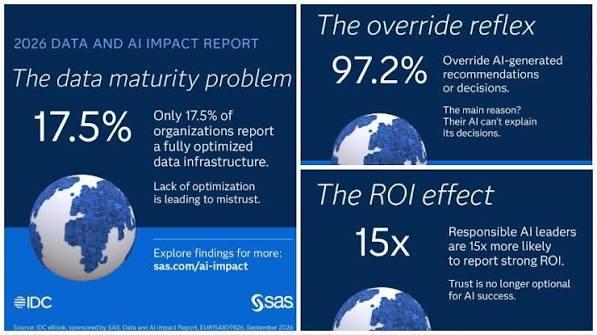
A new SAS report with research insights by IDC, based on a global survey of 2,699 business and technology decision-makers across 28 countries, uncovers what’s powering the organizations winning the race to profit from their AI investments: embracing trustworthy AI measures. Organizations applying trustworthy AI practices were 15 times more likely to report strong return on investment (ROI) from their AI projects.
As identified in the second annual Data and AI Impact Report: The New Economics of Trust, organizations with the strongest governance, data quality and auditability practices – a comparatively small market segment – consistently outperformed peers, reporting at least double the ROI from AI deployments. Fewer than one in 20 trustworthy AI ‘laggard’ organizations reported the same.
The findings carry particular weight in Egypt, which ranked first in Africa and 51st globally out of 195 countries in Oxford Insights' 2025 Government AI Readiness Index - a climb of 14 places in a single year. The ranking reflects the momentum behind Egypt's National AI Strategy (2025–2030), which targets a 7.7% AI contribution to GDP and the training of 30,000 AI specialists by 2030. As the country scales its AI ambitions across government and industry, the SAS report’s findings underscore what will determine whether that growth translates into returns: not just deploying AI faster, but deploying it in ways employees and regulators can trust and explain.
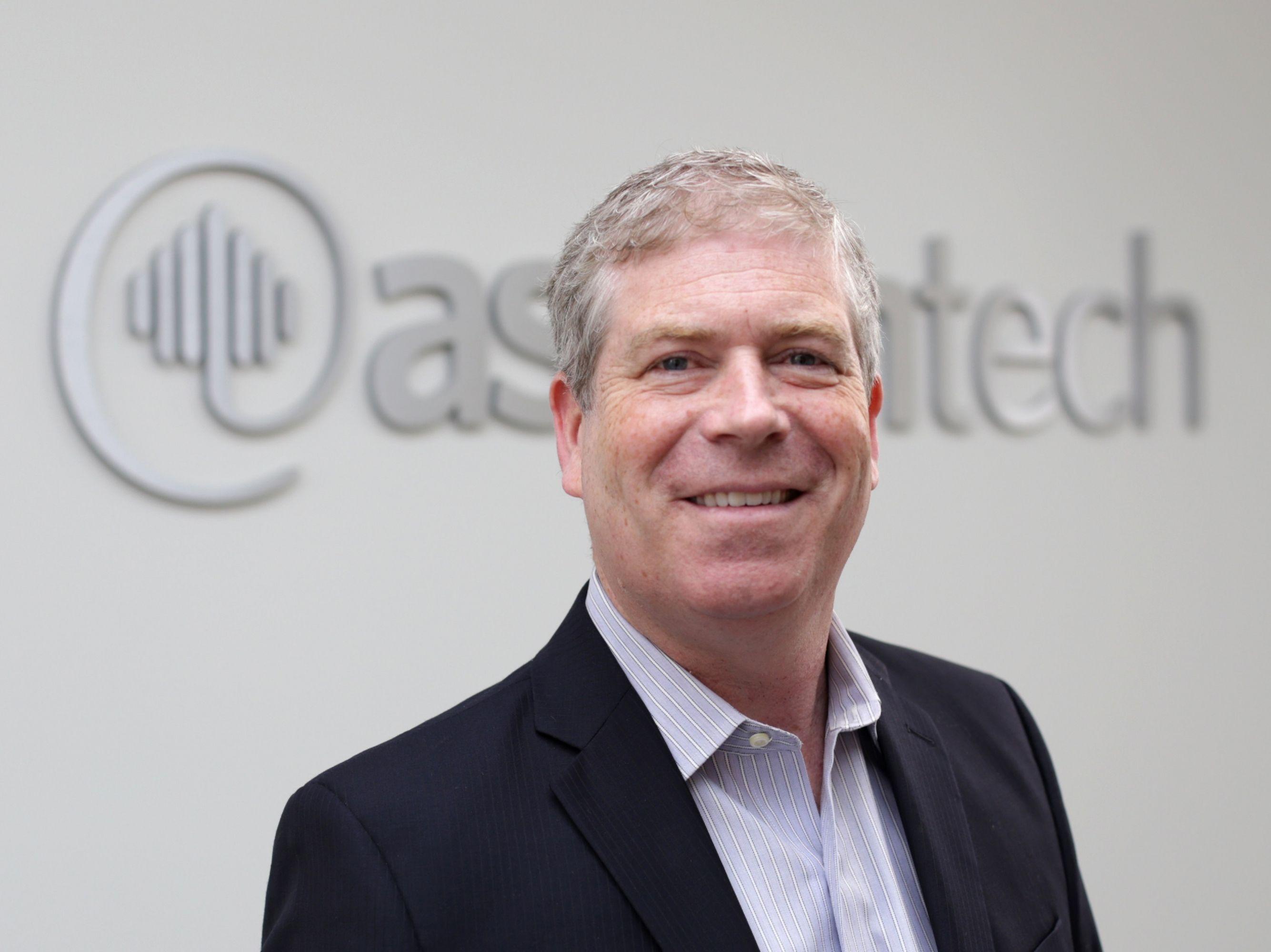
“When AI works, it’s incredibly impactful,” said Bryan Harris, CTO at SAS. “However, it is well documented that state-of-the-art agents can have error rates that exceed 25% on complex tasks[3] – which is unacceptable in high-stakes decision-making. In order to achieve accuracy and repeatability, organizations must embed domain expertise into agentic workflows, while keeping people at the center of governance and oversight. Organizations that do this successfully will close the trust gap and gain a competitive advantage in the market with AI.”
“As AI becomes more autonomous, organizations face a new challenge: maintaining confidence in systems people don't fully understand,” said Chris Marshall, Vice President at IDC. “Our findings show that stronger oversight, explainability, accountability and data foundations are becoming prerequisites for scaling AI successfully.”