By ; Islam Tawfik
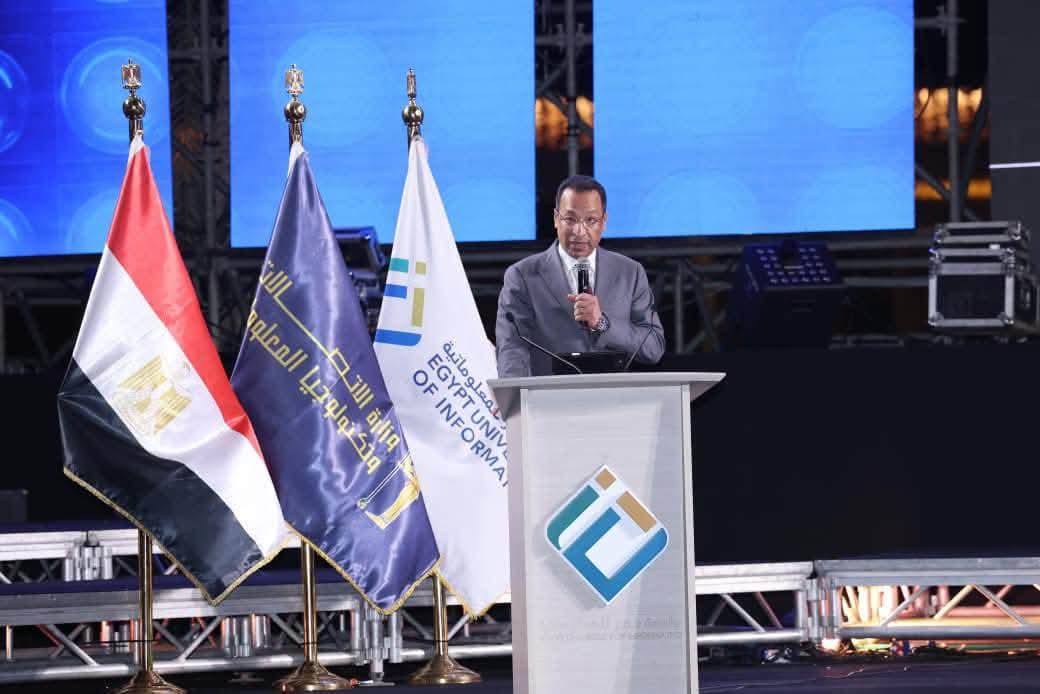
Minister of Communications and Information Technology Raafat Hendy has attended the graduation ceremony of Egypt University of Informatics’ (EUI) Class of 2026.
The event celebrated the second cohort of graduates of the Faculties of Computing and Information Sciences, Business Informatics, and Digital Arts and Design, as well as the first cohort of graduates of the Faculty of Engineering, and dual-degree recipients.
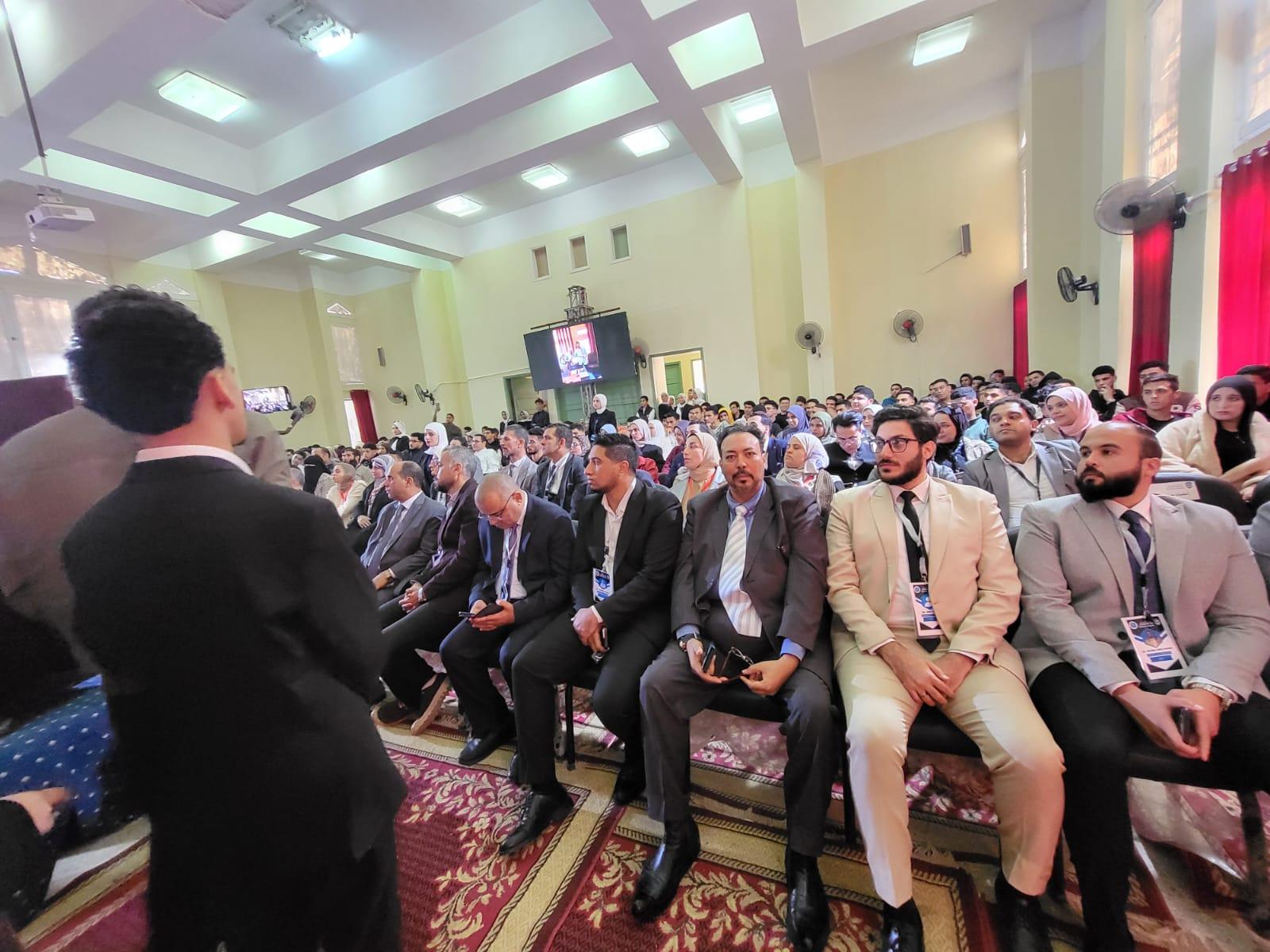
Held at EUI’s campus in Knowledge City, the New Capital, the ceremony was attended by Former ICT Minister Amr Talaat, Former Minister of Culture Ahmed Fouad Hanno, Former Minister of Scientific Research and Member of EUI’s Board of Trustees Sherif Hammad, Ambassador Extraordinary and Plenipotentiary of the Republic of Lithuania to Egypt Valdas Lastauskas, Deputy Head of Mission at the Embassy of Finland in Egypt Eero Väisänen, Secretary-General of the Council of National Universities (CNU) Maher Mesbah, representatives of EUI’s international partner universities, presidents of several private and national universities, senior officials from the Ministry of Communications and Information Technology (MCIT) and Ministry of Higher Education and Scientific Research (MOHESR), members of EUI’s Board of Trustees, faculty members, and the graduates and their families.
The ceremony celebrated the graduation of 214 students, 43 of whom earned dual degrees through partnerships with international universities. These included Purdue University in the U.S. (Computer Engineering, Electronics Engineering, and Communications), the University of Minnesota (Computer Science), and Telfer School of Management at the University of Ottawa in Canada (Business Technology Management).
In his remarks, the ICT Minister said he was pleased to take part in the event and congratulated the graduates. He stressed their role in shaping the future of Digital Egypt, which is about more than building telecom networks, data centers, and digital applications. Digital Egypt, he noted, starts and ends with investing in people and helping them turn their ambitions into reality.
That means giving young people the chance to hone their ICT skills throughout their education, helping graduates find jobs or launch startups, making digital services easier for citizens to access, helping businesses grow and reach digital services that meet their expectations, and using technology to tackle development challenges.
Hendy affirmed that digital capacity building is one of MCIT's top priorities, noting that the Ministry is expanding its training programs across a wide range of ICT fields through a diverse set of initiatives, most notably EUI. MCIT has also set up 24 Creativa Innovation Hubs to help young people build new skills and turn their ideas into real projects and startups. He stressed the Ministry's commitment to training young people in disciplines that match the needs of today's knowledge-economy job market, adding that studying at EUI prepares graduates for careers across the ICT sector.
The ICT Minister said the ICT sector offers significant opportunities to put these skills to work, noting that it grew by 19.3% in fiscal year 2025–26 and remains one of the country's fastest-growing sectors. The diversity of skills, he added, has helped position Egypt as a regional hub for exporting digital services worldwide. These results, he stressed, reflect growing confidence in the capabilities of Egyptian youth. They also give graduates the chance to work on international projects from Egypt and gain valuable experience, as well as to launch startups and help develop services for citizens and businesses across various sectors.
In addition, Hendy highlighted MCIT's efforts to drive digital transformation, develop and digitize government services, and streamline procedures and rework government workflows around citizens' needs. The Digital Egypt platform now offers nearly 250 digital services, he noted, each the result of a collaborative process that includes reengineering government operations, designing the service and the user experience, and building digital systems that are secure and reliable, with cybersecurity and business continuity built in. Each of these areas, he emphasized, gives EUI graduates a chance to apply their skills and expertise. He also pointed to MCIT's work to strengthen digital infrastructure, grow the data center industry, and build AI-based solutions that help address development challenges.
Hendy affirmed that this cohort's graduation brings new, qualified talent into the labor market, ready to help advance the Digital Egypt vision. He also thanked former ICT Minister Amr Talaat for conceiving the vision and laying its foundations, with the establishment of EUI at its core.
He paid tribute to the late Founding President of EUI Reem Bahgat for her pivotal role in building the university's prestigious reputation. Hendy also thanked the Board of Trustees for guiding the university toward initiatives that enhance its standing and foster successful partnerships, and praised the faculty members, led by EUI's Acting President Ahmed Hamad, for their dedication to supporting students and nurturing a new generation. He also acknowledged EUI's international partners for helping build Digital Egypt through knowledge and education.
The ICT Minister concluded his remarks by congratulating the graduates, their families, faculty members, and all partners. He said that having reached a milestone worth celebrating, the graduates were now ready to play a role in shaping the next chapter of Digital Egypt. Hendy added that he looked forward to seeing what they would achieve through their knowledge, dedication, and hard work.
For his part, former ICT Minister Amr Talaat said that EUI was founded on a vision that goes beyond simply awarding degrees. It was conceived as a comprehensive educational ecosystem designed to broaden students’ horizons, foster their creativity, raise their awareness, and encourage a lifelong pursuit of knowledge.
Talaat said that successive generations of ICT sector leaders had worked toward a shared goal: keeping Egypt at the heart of the Arab and African ICT landscape, drawing on the creativity and talent of its young people. When Egypt began developing its Digital Egypt strategy in 2019, EUI became a core part of that vision. Established in partnership with leading international universities as Africa’s first specialized university of its kind, EUI was created to give Egyptian youth a strong foundation for engaging with global developments and to prepare a new generation of talented, knowledgeable young people to contribute to Digital Egypt through learning, determination, and hard work.
On the sidelines of the ceremony, Hendy witnessed the signing of three cooperation agreements between EUI and France’s CESI École d’Ingénieurs. Under the first two agreements, EUI students will have the opportunity to pursue dual bachelor’s and master’s degrees at CESI in Computer Science and Computer Engineering, respectively. The third agreement establishes a student exchange program between the two universities. The agreements were signed by Acting President of EUI Ahmed Hamad and Director General of CESI Jean-Marc Ogier.
Hamad said the agreements with CESI will take effect in the 2026–27 academic year, following more than a year of discussions and preparations between the two universities. The two sides had previously signed memoranda of understanding (MoUs) during French President Emmanuel Macron’s visit to Cairo in April 2025.
The agreements, he explained, allow students from EUI’s Faculties of Engineering and Computing and Information Sciences to continue their studies at CESI in France, earning a bachelor’s degree from EUI and a master’s degree from CESI. The program began this year with seven students pursuing their studies at CESI campuses in Lyon and Toulouse, where they will gain advanced expertise in artificial intelligence (AI), computer engineering, embedded systems, cybersecurity, smart manufacturing, and digital transformation.
Hamad explained that the student exchange agreement focuses on the mutual recognition of equivalent courses between CESI and EUI. This allows French students to study at EUI, while enabling Egyptian students to study at CESI in France.
During the ceremony, Counsellor for Cooperation and Cultural Affairs at the French Embassy in Cairo Matthieu Combe, Director General of CESI Jean-Marc Ogier, Director of Graduate Studies for Computer Science at the University of Minnesota Mohamed F. Mokbel, and Founder and Director of ISART DIGITAL Xavier Rousselle congratulated the students who completed their studies abroad. They reaffirmed their confidence in EUI and appreciation for the partnership, highlighting the University’s academic excellence across its facilities and laboratories, curricula, courses, and programs aligned with the latest advances in science and technology.
The officials also praised EUI’s approach to applying this knowledge in laboratories that meet international research standards. They also highlighted the university’s close engagement with developments in the ICT industry, supported by an extensive network of partnerships with leading international companies.
The ceremony was also attended by Executive President of the National Telecom Regulatory Authority (NTRA) Mohamed Shamroukh, Assistant ICT Minister for Digital Transformation Mahmoud Badawi, Acting Permanent Undersecretary and Head of the Central Department for Financial and Administrative Affairs at MCIT Samer Saeed, Director of the National Telecommunication Institute (NTI) Ahmed Khattab, Advisor to the ICT Minister on International Relations Khaled Taha, and Chairman of the National Academy of Information Technology for Persons with Disabilities (NAID) AbdEl-Monem El-Sharkawy.
Established by MCIT in collaboration with MOHESR, EUI is the first university in the Middle East and Africa dedicated to ICT. It comprises four faculties:
- The Faculty of Engineering offers five programs: Electronics and Communications, Computer Engineering, Architectural Engineering, Industrial Engineering, and Mechatronics Engineering.
- The Faculty of Computing and Information Sciences offers the following tracks: Computer Science, Artificial Intelligence, Cybersecurity, Data Science and Engineering, and Software Engineering.
- The Faculty of Business Informatics offers four majors: Finance, Business Analytics, Business Technology Management, and Digital Marketing and E-Commerce.
- The Faculty of Digital Arts and Design offers four programs: Game Design, User Experience Design, Digital Interior Design, and Animation Arts.