By: Ghada Helmy
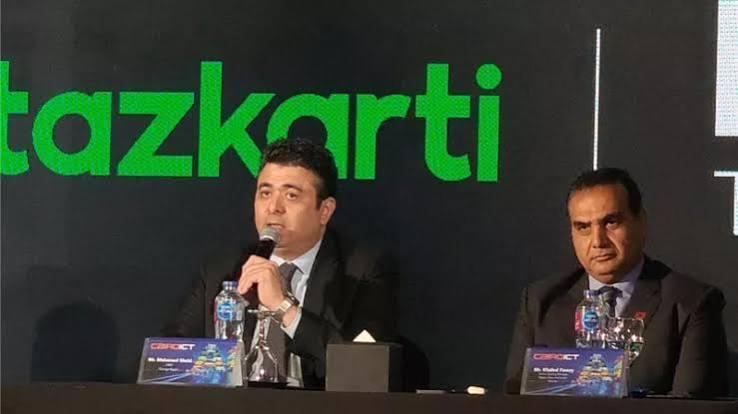
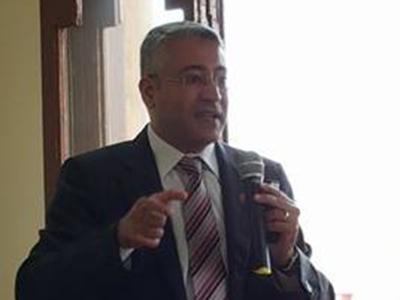
Mohamed Shibl, Executive Vice President for the Enterprise Business Unit at Orange Egypt,
stated that the Cairo International Technology Exhibition and Conference (Cairo ICT) has
become a hub for companies in the technology sector. It offers an opportunity to explore the
latest developments and solutions, eliminating the need to travel abroad to discover new
innovations. He noted that the nature of the exhibition has evolved significantly over the past
few years, in tandem with the rapid transformations taking place within the sector.
He added that the company is developing technology solutions based on artificial intelligence
(AI) and data processing, leveraging local talent and the technological infrastructure built over
recent years. The company plans to expand the reach of these solutions beyond the Egyptian
market, exporting them to 17 African countries where the group operates. Shibl highlighted
that sustainability, cybersecurity, and AI have become core pillars reflecting the evolution of the
technology industry. He further pointed out that Egypt possesses a competitive advantage in its
young human capital—a workforce capable of learning and adapting to technological
advancements.
Shibl explained that, four or five years ago, discussions surrounding cybersecurity focused
primarily on how to handle global cyberattacks and protect local data from them. Since then,
Egypt has witnessed a notable increase in the number of specialized professionals in this field,
as well as a significant rise in their level of expertise. He noted that the availability of a large
youth base has helped build a pool of Egyptian talent specialized in cybersecurity—a sector that
previously faced challenges due to a shortage of the expertise and capabilities required to
address digital threats. He emphasized that this development is not limited to a single field;
rather, it reflects the capacity of local professionals to acquire advanced technological skills.
The Executive Vice President for the Enterprise Business Unit at Orange Egypt then turned to
the transformations brought about by artificial intelligence (AI) in the technology industry. He
highlighted a significant investment opportunity linked to the expansion of data centers, noting
the massive investments expected to flow into this sector between now and 2030.
He explained that data centers serve as the essential infrastructure for developing and
operating AI applications—acting, in effect, as "factories" for digital solutions—while AI
technologies provide the resources that enable the creation of new products and services
across various sectors. He pointed out that the current shift differs from previous years:
companies and nations are no longer confined to using imported technology; instead, they now
have greater opportunities to develop solutions and manufacture technological products
locally, paving the way for their export to African and global markets. Shibl revealed that
Orange Egypt has been working for about four years to develop its capabilities in the fields of
data and artificial intelligence. During this period, the company began building specialized
solutions for data quality—the foundation upon which AI applications rely for learning and
generating effective solutions. He explained that for the past three years, the company has
been developing a data-processing model based on open-source technologies and the expertise
of Egyptian talent. He further noted that efforts are underway to export this model to 17
African countries where the group operates, a testament to the growing capacity of local teams
to build solutions that can be deployed across multiple markets .
Mohamed Shibl: Orange Egypt Aims to Export Data Processing Solutions to 17 African Countries